The Budget Binder Accessories That Survive a Real Teenager
Last Updated on September 1, 2026 by Yadira Bacelic
This post may contain affiliate links, which means I’ll receive a commission if you purchase through my links at no extra cost to you. Please read the full disclosure for more information.
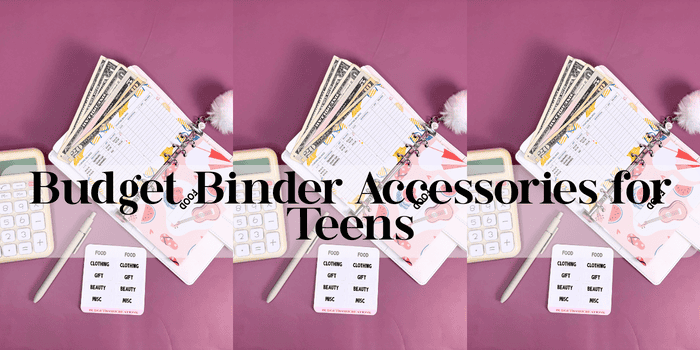
When parents decide to introduce
My daughter started with three piggy banks as she got older she started using her cash envelopes and it has helped her stay within budget. She does have a binder, but she mostly takes out the one envelope she uses most, because she is also using bank apps.
The right budget binder accessories for teens don’t add complexity. They add clarity. For teens who are just learning how to manage money, simple tools like cash envelopes, dividers, and basic trackers help make
At the same time, it’s easy to overdo it. Too many pages, categories, or decorative extras can turn
In this article, we’ll walk through 9 simple, stress-free budget binder accessories for teens that make
What accessories does a teen need in a budget binder?
She needs five things to start: cash envelopes, category dividers, a simple spending log, a
Must-Have Budget Binder Accessories for Teens
When it comes to choosing budget binder accessories for teens, less really is more. A teen budget binder doesn’t need to be packed with extras to actually work. It just needs a few simple tools that make money easier to see, sort, and manage without turning it into something that feels like homework.
Here are 9 practical add-ons that can make a teen budget binder more helpful:
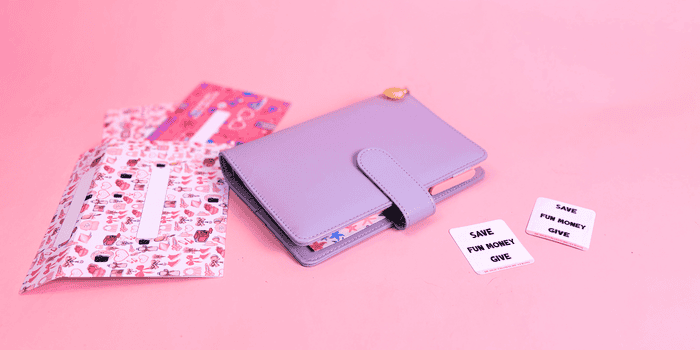
1. Cash envelopes
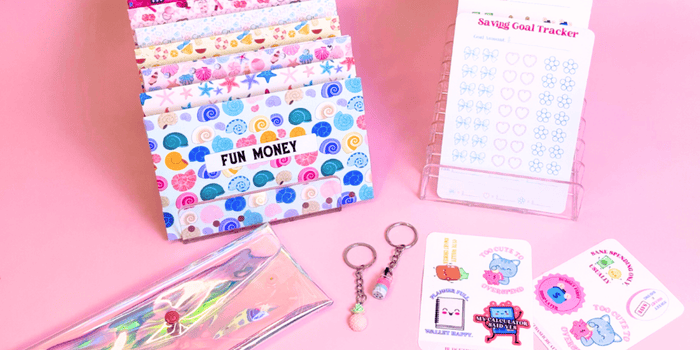
Cash envelopes are one of the most useful budget binder accessories for teens because they create a clear boundary for spending. When money is separated by category, it’s easier to see what’s left and when it’s time to stop.
2. Savings challenge cards
These are a simple way to make saving feel a little more rewarding by using saving challenge cards/trackers. Teens can color things in, check off progress, or work toward a small goal without it feeling complicated.
3. Goal tracker inserts
A basic goal tracker helps teens stay focused on one thing at a time. Seeing progress written down just makes it feel more real and a little more motivating to keep going.
4. Category dividers
Dividers keep spending, saving, and goal pages separated in a way that actually makes sense. It seems small, but it makes the binder much easier to flip through and use consistently.
5. Spending log pages
A simple spending log gives teens a place to jot things down and start noticing patterns. It doesn’t need to be perfect. Even a quick note here and there can build awareness over time.
6. Zip pouches
Zip pouches are great for holding cash, receipts, coins, or anything loose that would otherwise get lost. They just keep everything a little more contained and easy to find.
7. Label stickers or category tabs
Labels make everything easier to understand at a glance. Teens can quickly find what they need without digging through pages, which makes the whole system feel less frustrating.
8. Bill tracker pages
For older teens with subscriptions, car expenses, or small monthly payments, a bill tracker can be really helpful. It gives them a simple place to keep track so nothing slips through the cracks.
9. A pen loop or mini calculator
This one sounds small, but it matters. When a pen or calculator is right there, teens are way more likely to actually use their binder instead of putting it off.
A good teen budget binder doesn’t need every extra page or insert out there. The best budget binder accessories for teens are the ones that keep things simple, clear, and easy to stick with. And if you’d rather not piece it all together yourself, a ready-made teen budget binder kit that includes these basics can make getting started feel a lot easier for both you and your teen.
How to Set Up Her Budget Binder in One Sunday Afternoon
Setting up a budget binder is not a project. It takes about twenty minutes, and the biggest mistake is treating it like a bigger event than it is. If you build the whole system before she has put a single dollar in it, you have made her a binder full of pages she did not ask for. Build the smallest version that works, then let her tell you what is missing.
Start with three categories, not twelve
Ask her where her money actually goes right now. Not where it should go where it goes. Most girls land on the same three: eating out with friends, something for her room or her face, and one thing she is saving toward. Those three become her first three envelopes. Twelve categories is a system she will abandon by the third week; three is a system she will still be using when she asks you for a fourth.
Let her label everything herself
This sounds small and it is not. The labels are the part she looks at every time she opens the binder, and handwriting she recognizes as her own changes how much of it feels like hers. Hand her the label sheet and the pen and go do something else. It will not be as neat as if you did it. That is the point.
Put the first real money in before you close it
An empty binder is a craft project. A binder with eleven dollars in the eating-out envelope is a budget. Whatever cash she has on her that afternoon birthday money, the last of her paycheck, the twenty in her jacket split it into the envelopes before you put the binder away. She should see the system holding real money once before it goes on the shelf.
Decide together when she’ll open it again
Pick a day. Sunday evening works because it sits in front of the week rather than behind it. This is a five-minute check, not a meeting she moves cash around, writes down anything she spent, and closes it. A binder without a standing time to open it becomes a binder nobody opens. If money is still a hard subject in your house, start with talking to her about money before you hand her a binder.
What She’ll Still Be Using Three Months Later
Every list of budget binder accessories tells you what to buy. Almost none of them tell you what a real teenager is still using once the novelty wears off, which is the only question that actually matters. After the first few weeks, a teen’s binder sorts itself into three piles.
The ones that survive
Cash envelopes and the
The ones she stops using but should keep
Spending logs and bill trackers get abandoned first, and they are worth keeping in the binder anyway. She will come back to them usually the first month she runs out of money early and wants to know where it went. A blank log she ignored for six weeks is still there when she finally has a reason to want one.
I gave her a calculator and too many cash envelopes. She used them for a month or so, then she used only 3-4 cash envelopes, and the calculator was used but only for about a month. It wasn’t her thing. She prefers to have 4 envelopes.
The ones that never get touched
Decorative stickers, extra pouches, and anything that requires her to write more than one line per day. If she has not used it in a month, she is not going to, and leaving it in the binder makes the binder feel like homework she is behind on. Take it out.
What to do with what’s left
Pull the untouched pages out and put them somewhere she can get them. Not thrown away; she may want them at seventeen when she has a job and a car payment and a reason. A thinner binder she opens beats a complete one she avoids.
How to Choose Budget Binder Accessories for Her
Choosing the right budget binder accessories for teens starts with understanding your teen, not the tools. What works well for one teen may feel overwhelming or unnecessary for another, which is why flexibility matters more than having a “perfect” setup.
If She’s a Visual Learner
Some teens prefer very visual tools. They like seeing money divided clearly and benefit from accessories like cash envelopes or simple dividers. These budget binder accessories for teens help them understand where money is going without needing detailed explanations or constant reminders.
If She’d Rather Keep It Minimal
Other teens prefer minimal structure. For them, fewer accessories work better. A basic
If Her Money Comes in Irregularly
It’s also helpful to consider how your teen earns money. Teens with a first job may benefit from accessories that support planning ahead, while teens receiving allowances may do better with simpler tools focused on awareness. Matching budget binder accessories for teens to income type keeps
Finally, think about how involved your teen wants you to be. Some teens like reviewing things together, while others prefer more independence. The right accessories support that balance by offering guidance without control.
When budget binder accessories for teens align with your teen’s personality, schedule, and comfort level,
When Budget Binder Accessories Make a Great Gift
There are certain moments when budget binder accessories for teens make especially meaningful gifts. These are often times when teens are stepping into more responsibility and could benefit from tools that help them feel prepared rather than pressured.
Her First Job
A first job is one of those moments. When teens start earning their own money, having simple budget binder accessories for teens in place can help them organize spending and saving right away. Instead of reacting to money after it’s spent, teens begin learning how to plan ahead with confidence.
The Start of a School Year
Back-to-school and senior year are also natural opportunities. These seasons often come with new expenses, busy schedules, and more independence. Gifting practical
Some parents also choose budget binder accessories for teens as birthday or milestone gifts. When framed as tools for independence rather than rules, these gifts tend to be received more positively. Teens often appreciate having something that helps them feel capable and trusted.
What matters most isn’t the occasion itself, it’s the intention behind the gift. When
When Teens Are Ready to Upgrade Their Budgeting System
As teens grow more comfortable managing their money, there often comes a point when budget binder accessories for teens feel like part of a larger picture. This usually happens when teens begin juggling multiple goals, planning further ahead, or wanting a more organized way to manage everything in one place.
She Starts Asking for More Categories
You might notice your teen asking questions about planning ahead, separating money more clearly, or tracking progress over time. These moments don’t mean the current system isn’t working they mean the habits are taking root. The budget binder accessories for teens you started with have done their job by building confidence and awareness.
At this stage, some families begin exploring simple teen
She Wants an App Too
Other parents start looking for money management gifts for teens that support the next stage of independence. These tools can be especially helpful during transitions like a first job, senior year, or preparing for life after high school.
Some teens continue using budget binder accessories alongside a more complete setup, while others naturally shift to a new system. There’s no right or wrong timeline. What matters most is choosing tools that grow with her and continue to feel supportive rather than overwhelming.
When my daughter started using cash envelopes and bank apps, it has helped her be more focused and organized with her money. If your daughter is ready for that step, here are the best money apps for teens.
Budget Binder Accessories Teens Actually Use (What to Skip)
When you’re shopping for budget binder accessories for her, it’s easy to assume that more tools will lead to better habits. In reality, teens tend to use fewer accessories, and they use them more consistently. Knowing what to skip can be just as important as knowing what to include.
Skip: Detailed Tracking Pages
One common mistake is adding too many detailed tracking pages. While these might look helpful at first, overly complex logs often go unused. Teens are far more likely to disengage when
Skip: More Than Five Categories
Another thing to skip is having too many spending categories. When teens are forced to track every small expense across multiple sections,
Skip: Anything Purely Decorative
Decorative extras can also become a distraction. While a small amount of personalization is fine, filling a binder with decorative stickers or accessories can take the focus away from money habits. The most effective budget binder accessories for teens are functional first, aesthetic second.
Finally, avoid accessories that require strict rules or timelines. Teens benefit from flexibility, especially when balancing school, work, and activities. Tools that allow room for adjustment tend to support habits far better than rigid systems.
When you choose her budget binder accessories with intention and skip what adds pressure,
Nice-to-Have Accessories (That Don’t Overcomplicate Things)
Once the essentials are in place, some families like to add a few extra budget binder accessories for teens that make the system feel more personal or easier to maintain. These accessories aren’t necessary, but when chosen carefully, they can help teens stay engaged without adding stress.
One optional add-on parents often consider is functional budget stickers. These aren’t decorative pages meant to look pretty they’re simple labels that help teens quickly identify categories or goals. Used sparingly, stickers can make
Another helpful option is a zipper pouch or binder pocket. These budget binder accessories for teens give teens a place to store receipts, loose cash, or notes without cluttering the binder itself. For teens who are still building consistency, having a designated “catch-all” space can prevent frustration and lost items.
Some teens also benefit from tabs or section markers. These help teens flip quickly between saving, spending, and goal sections without feeling overwhelmed by pages. When navigation is easy, teens are more likely to open the binder and actually use it.
The key with nice-to-have accessories is restraint. Adding too many extras can turn
Why Budget Binder Accessories Matter for Teen Beginners
For teens who are new to
Beginner teens often struggle with knowing where their money should go. Simple budget binder accessories for teens, like cash envelopes, basic dividers, or goal trackers, create clear categories without requiring complicated systems. This structure helps teens make decisions with confidence instead of guessing or feeling overwhelmed.
Another reason budget binder accessories matter is consistency. When tools are simple and intuitive, teens are more likely to use them regularly. Overly detailed pages or too many accessories can cause teens to disengage, especially if
For parents, these accessories also make money conversations easier. Instead of correcting mistakes or tracking every dollar, you can focus on guiding your teen through choices and progress.
At this early stage, the goal isn’t perfection. It’s helping teens feel capable. When budget binder accessories for teens reduce friction and increase clarity, they lay the groundwork for habits that grow naturally over time.
FAQ
What accessories does a teen actually need in a budget binder?
Five: cash envelopes, category dividers, a spending log, a
What size binder works best for a teen?
A5 or half-letter. A full-size three-ring binder holds more but she won’t carry it, and a binder that lives in a drawer stops being part of her week. The smaller size fits in a backpack or a tote, which is the difference between a system she uses and a system she owns.
Should she use cash envelopes if she gets paid by direct deposit?
Yes, at least at first. She can pull out a set amount each payday and split it into envelopes for the spending categories, leaving the rest in the account. The cash is what makes the limit visible. Once she can feel the limit without seeing it, she can move more of it digital.
How many categories should a teen budget binder have?
Three to five. Twelve categories is an adult budget with rent and utilities in it, and it collapses within a month. Start with the three places her money actually goes, and add a fourth only when she asks for one. Her asking is the signal she’s ready, not your schedule.
Are budget binder accessories a good gift for a teen girl?
They work when they arrive at a moment that makes sense a first job, a first paycheck, the start of a school year, moving into a first apartment. Given at a random moment, a budget binder reads as a correction. Given the week she starts earning, it reads as you noticing she’s earning. More money gifts that teach her something real.
What if she stops using it after a few weeks?
That’s normal and usually means there’s too much in it. Take out everything she hasn’t touched, keep the envelopes and the
She Doesn’t Need the Whole System. She Needs the First Three Things
Choosing the right budget binder accessories for teens doesn’t require a perfect system or a long list of supplies. What matters most is creating a setup that feels clear, supportive, and easy for your teen to use consistently. When
The accessories you start with help shape how your teen experiences money. Simple tools that make saving and spending visible can build confidence over time, even when income is limited or schedules are busy. And as your teen grows, those early habits make it easier to take on more responsibility without feeling overwhelmed.
You don’t have to introduce everything at once. Starting small, adjusting as needed, and keeping conversations open often makes the biggest difference. The right budget binder accessories for teens are the ones that support real life not perfection.
If you ever find yourself thinking ahead to the next stage, there are tools designed to grow with your teen when they’re ready. For now, trust that you’re laying a strong foundation simply by showing up and guiding the process with intention.
You’re not just helping your teen organize money.
You’re helping them build skills that last.
Other Posts You May Like